


- The Little Bighorn Battlefield is in southeastern Montana
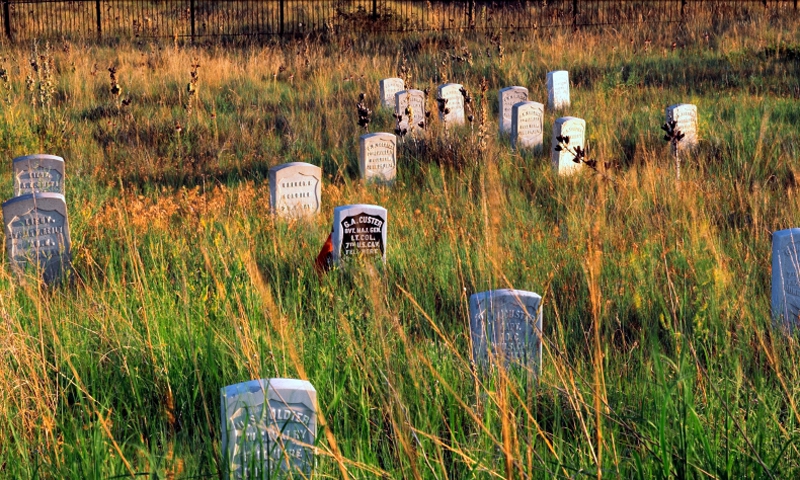
- Visit the site where Custer made his last stand
- Get a flavor of history at the Custer Battlefield and the Reno-Benteen Battlefield
- Tour the Custer National Cemetery
- It’s only a two and a half hour drive from Cody, Wyoming
Overview
In southeastern Montana, the Little Bighorn Battlefield is a national memorial placed at the site where the Sioux and Cheyenne Tribes fought to preserve their way of life. It was made a National Monument in 1946.
Hours/Seasons
Little Bighorn Battlefield is open all year, although closed on Thanksgiving, Christmas and New Year’s Day. Hours are 8 am to 9 pm from Memorial Day to July 31. It closes at 6 pm from August 1 to October and April through May. From November through March it closes at 4:30 pm.
Fees
Entrance fees are:
- $10 for a private vehicle
- $5 for pedestrians and motorcycles
- No charge for the National Cemetery
Highlights
There are two separate battlefields at the Little Bighorn Battlefield National Monument, the Custer Battlefield and the Reno-Benteen Battlefield. The National Cemetery is also worth a visit. You’ll find fascinating displays within the visitor center, showing events leading up to the battle, Native American life in the area and weapons used.
The date of 1876 was memorable with the Battle of Little Bighorn where the Northern plains Native Americans fought the cavalry to protect their rights and prevent going to live on reservations.
Getting Here
To reach Cody from Little Bighorn Battlefield, take I-90 West and take exit 434 to US 212 South. Continue on MT 72 to WY 120 to Cody. It’s only a two-hour and 30 minute drive, well worth the time.